An array of copy samples for Geologie Instagram posts, spanning brand story, new product launches, topical events, and holiday deals.
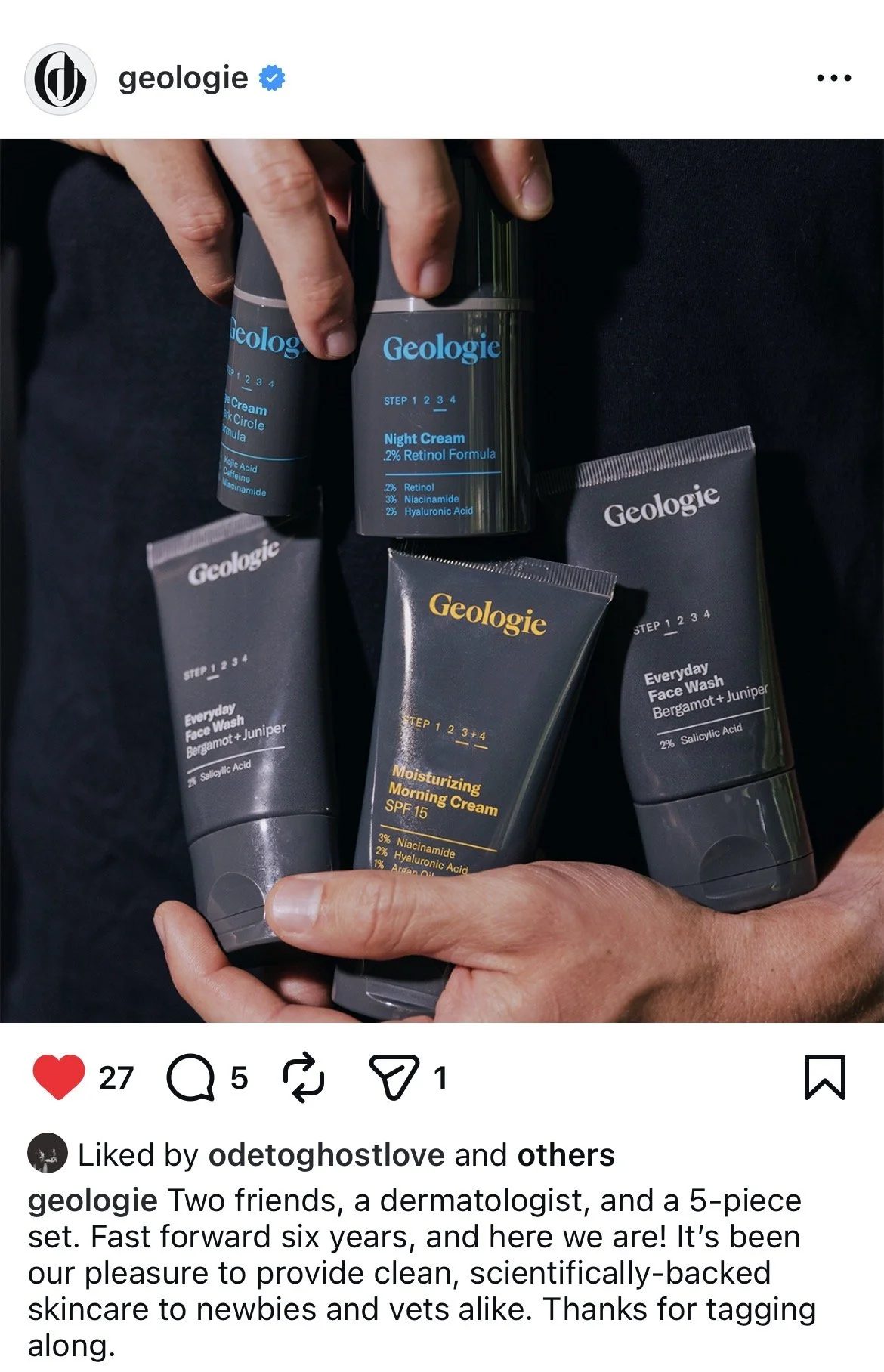
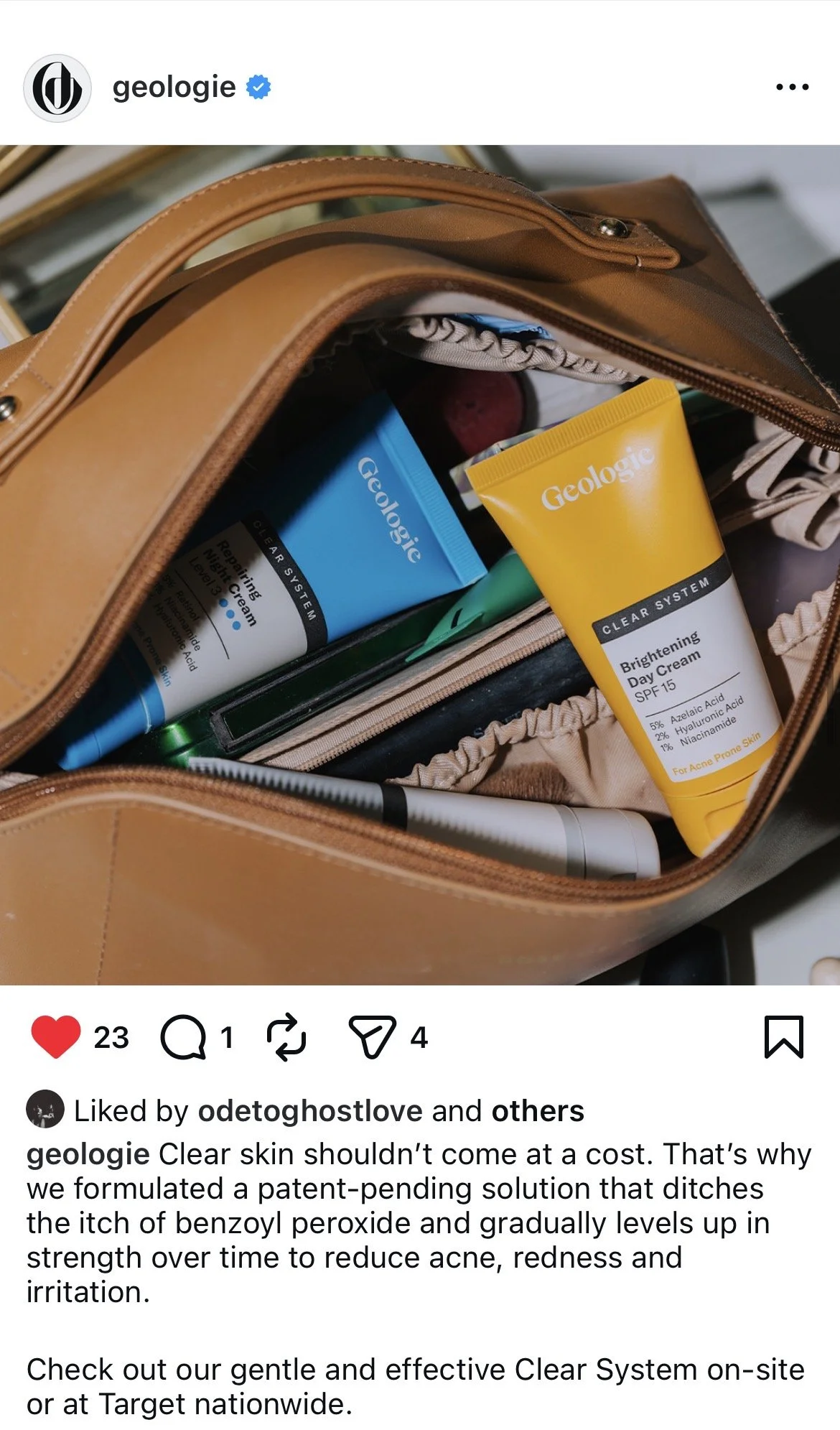
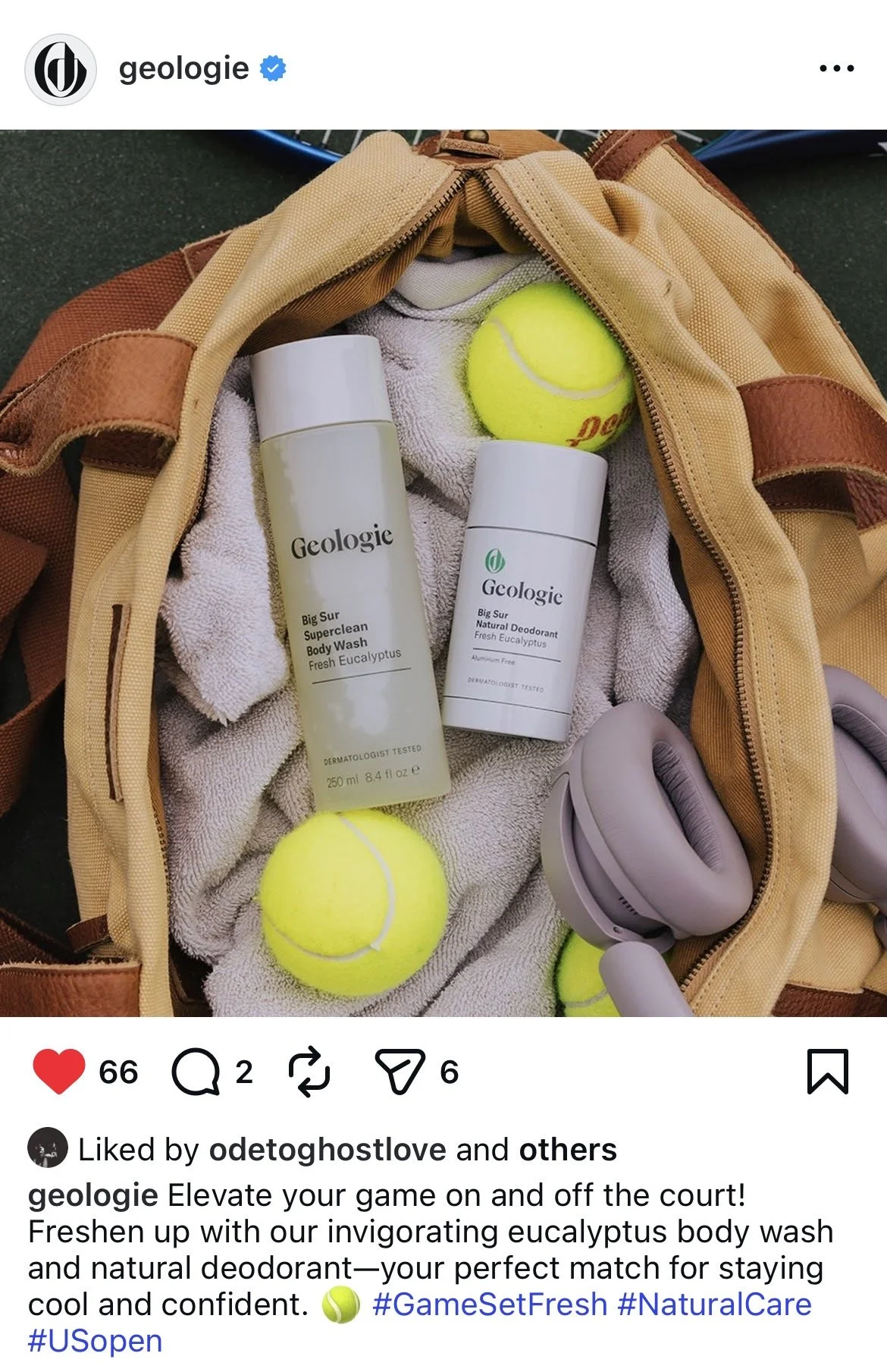
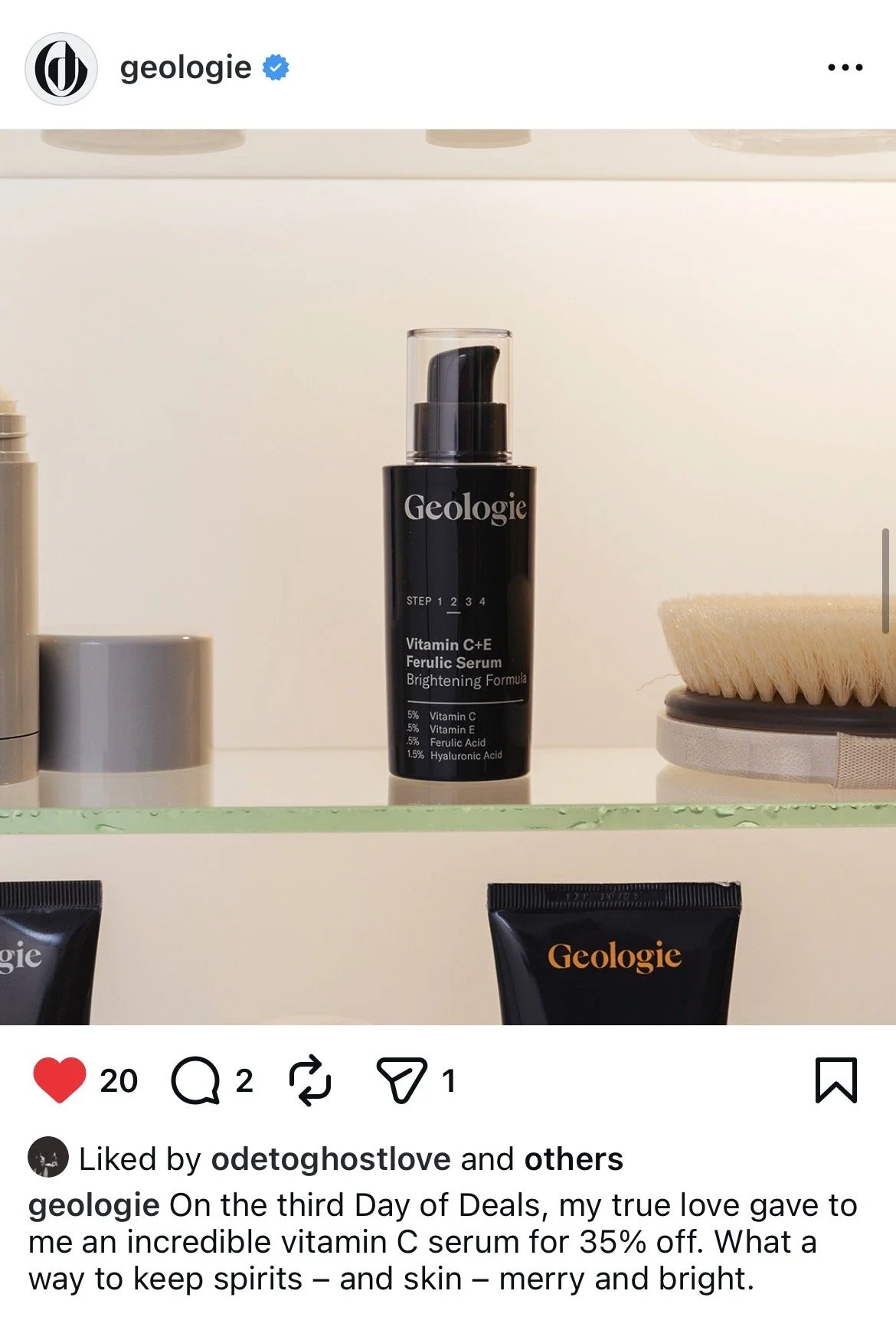
Geologie Product Copy
A round of product copy updates for all of Geologie’s skin, hair and body offerings, including description, key selling points, and primary active ingredients.
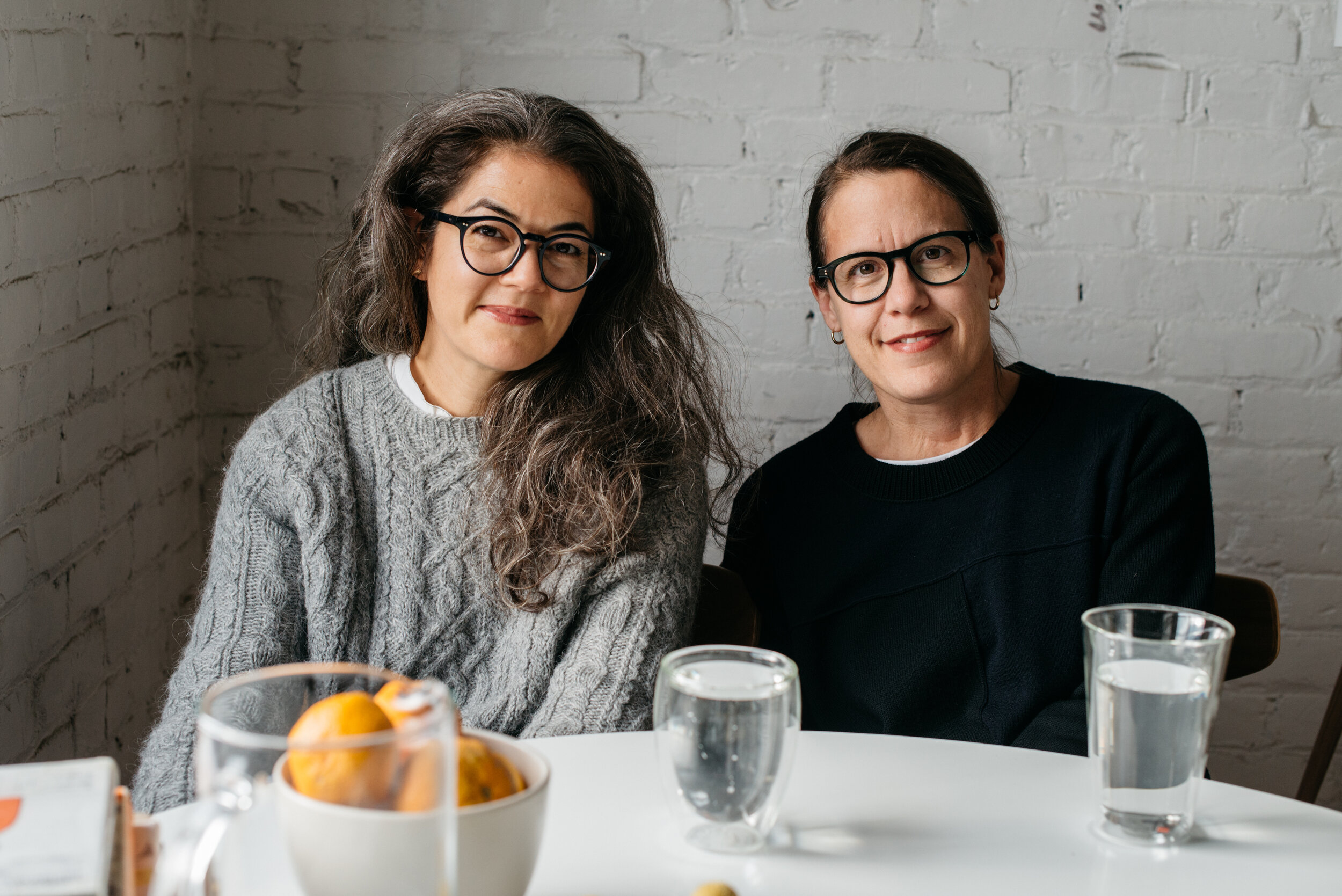
L-R Kara Yanagawa and Tess Darrow (founder) of Egg Press
S&A Meet the Maker: Egg Press
This year, Portland-based greeting card manufacturer Egg Press is celebrating its 20th anniversary in business. And while most of life’s major events — marriage, childbirth, you name it — have taken place over that timespan for founder and co-creative director Tess Darrow, she confesses that much of her day-to-day still has the wonder and energy of when the company first started. “There are still many moments where we all feel the enthusiasm of a startup,” she says. “New cards, without fail, always produce the same feeling of excitement when they come off the press for the first time.”
Tess bought her first letterpress in 1994, and opened up Egg Press five years later, utilizing the design experience she acquired working for Nike to create unique, thoughtful greeting cards for all occasions. According to Tess, the market got noticeably more crowded in the mid-2000’s, but Egg Press stayed true to its core values and thrived, taking on licensing, manufacturing, and fulfillment duties for three additional stationery brands: HelloLucky, ASHKAHN, and 1973 Ltd.
Egg Press remains a steadfast champion of domestically designed and printed greeting cards. As the forces of outsourced mass-production and more intentional, small-batch goods battle it out, Tess hopes and believes that consumers will see the value in splurging ever so slightly for a card that is more personal and full of expression rather than settling for a grocery store throwaway.
Read our interview with Tess below.
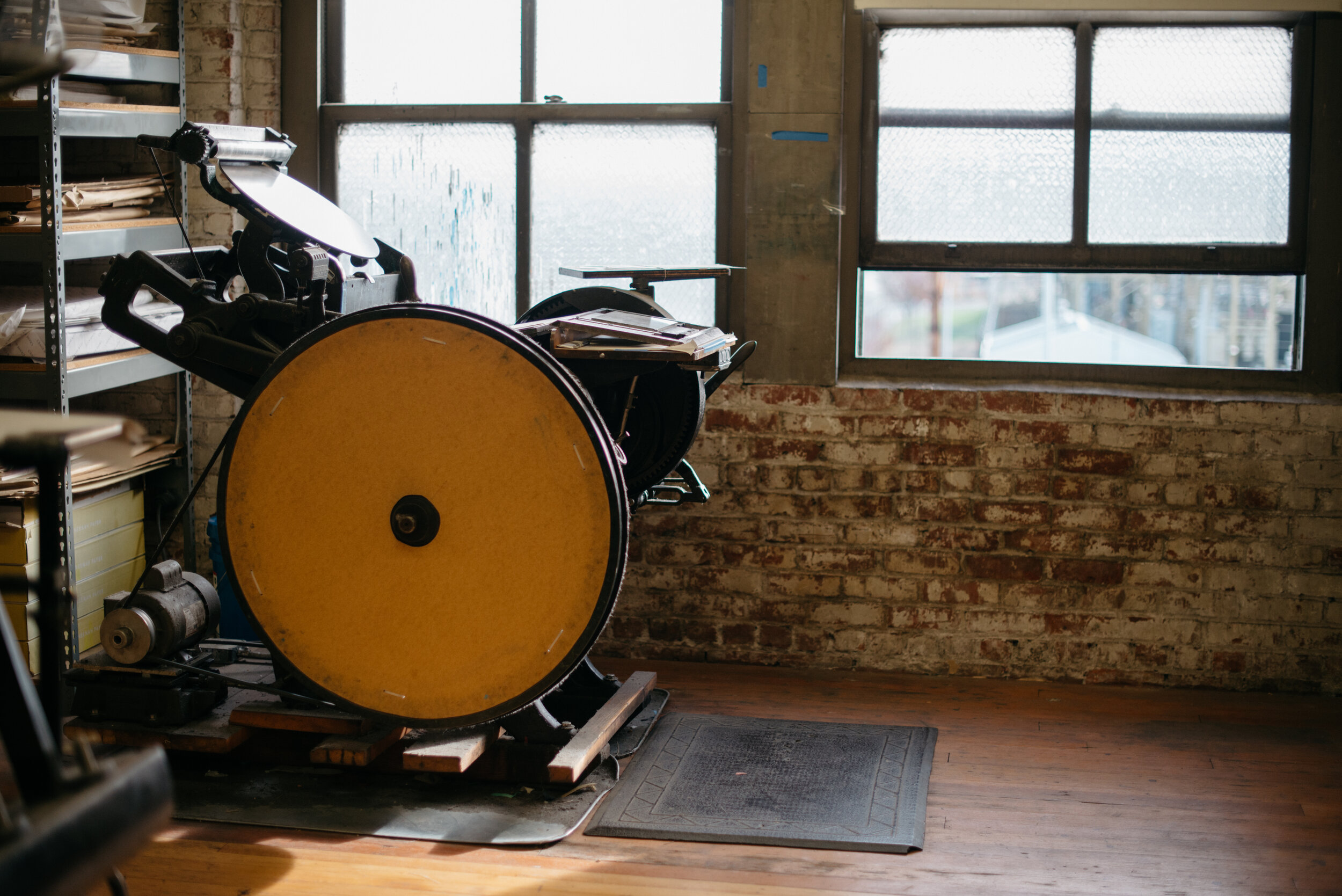
Meet The Maker: Egg Press
S&A: Tess, Egg Press is celebrating its 20th anniversary this year. Congrats! How have things changed for you and EP since its beginnings in 1999?
T: I can’t believe it’s been 20 years. For Egg Press, it’s safe to say that every logistical detail, every procedure, every pie-in-the-sky idea has been hashed and rehashed since 1999. Not to mention the experience of many of life’s major milestones: marriage, house remodels, births, deaths and all the personal discoveries that come with those, including grey hair. But what is such a wonder is how much everything in a way still feels the same. There are still many moments where we all feel the enthusiasm of a startup. New cards, without fail, always produce the same feeling of excitement when they come off the press for the first time. And I still feel that we haven’t even scratched the surface when it comes to the possibilities that the letterpress medium presents. When I bought my first press in 1994, I was so blown away by all the subtle effects that the printing method has to offer. That hasn’t changed.
S&A: What shifts within the industry have you witnessed take place over the past 20 years, and how has EP adapted and evolved as a result?
T: When Egg Press opened its doors in 1999, I was applying what I knew from my background in textile design and combining it with my 5 years of experience working as a young designer at Nike. I loved the challenge of production, and really felt there was a huge aesthetic opportunity in the market for greeting cards that were less classic and old-fashioned in design. I’d not really seen anyone using letterpress to print allover patterns, and that got me going. About 5 years in, there were a ton of other small letterpress printers popping up, and soon the landscape was flooded with competition. My conviction is that so long as we are true to the Egg Press spirit and soul, without worrying what others are doing, we will persist and continue to be influential in the industry.
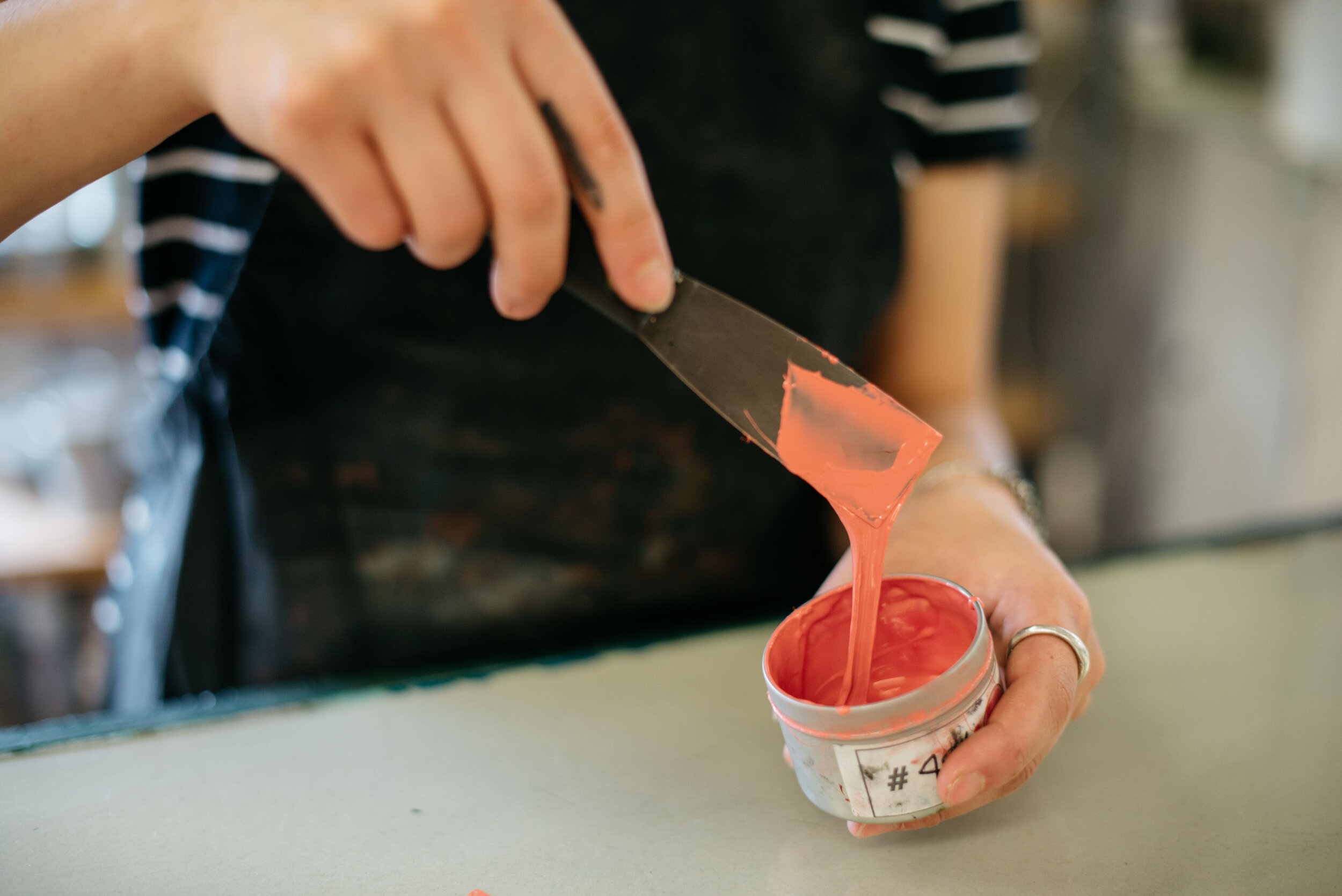
S&A: Tell us a little bit about what you do in your role as creative director. What influences your decision making process when determining which direction to take Egg Press creatively?
T: Kara and I have been designing the cards together for about 15 years now. The process is very organic, but it works. What’s also strange about our process is that we combine our efforts so much during design time that we don’t always know who designed what. At first, this seemed like a funny and inefficient way of doing things, but I’ve come to realize that it brings an energy that solo work doesn’t. We pay little attention to what’s happening in the industry, which maybe isn’t best practice, but I find that staying in our bubble during creative bursts is more happy and comfortable. We aren’t super intentional about where we go creatively, but I think that’s what makes it refreshing — we don’t overthink it.
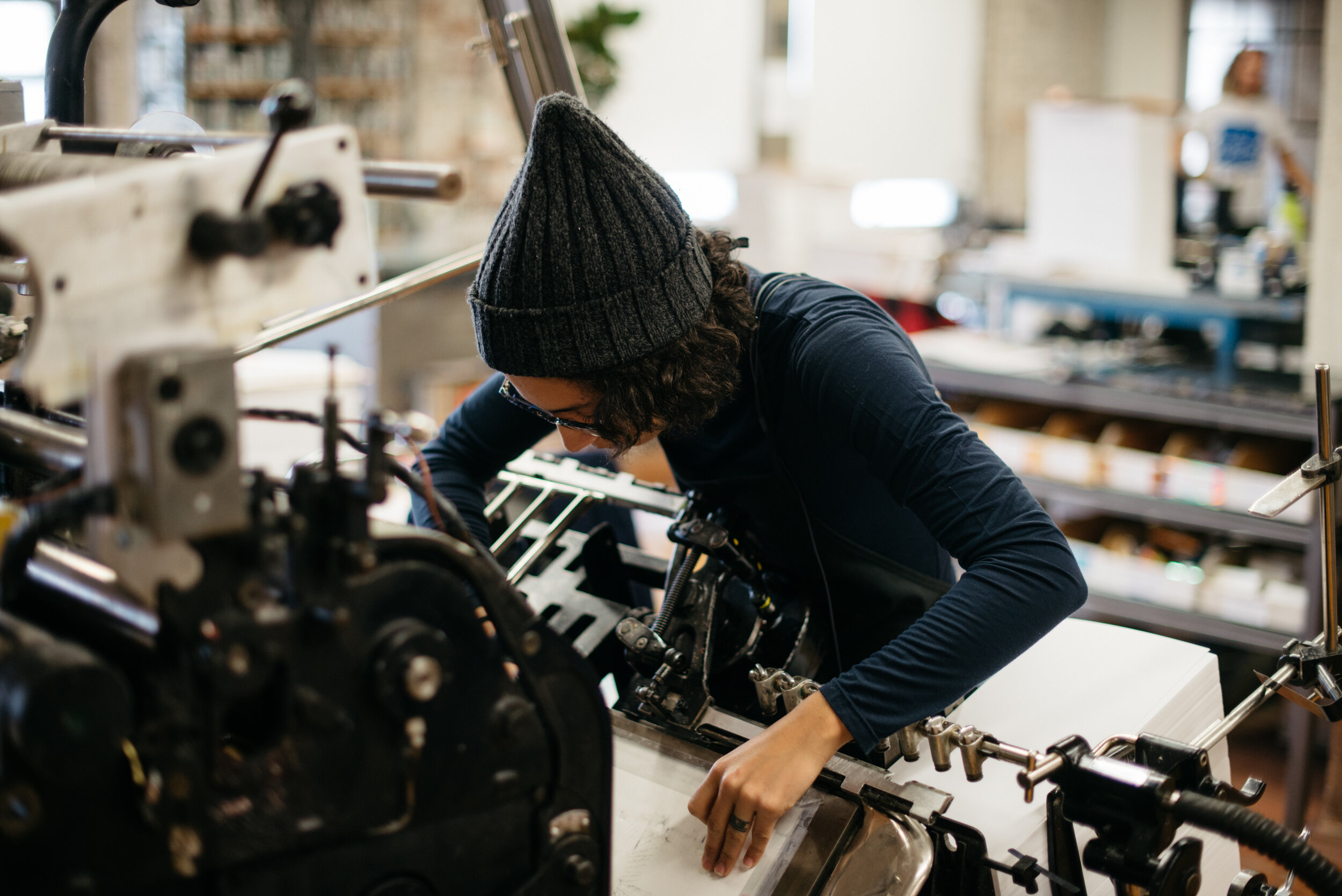
S&A: You all handle licensing, manufacturing, and fulfillment for three other stationery brands, HelloLucky, ASHKAHN, and 1973 Ltd. Tell us a little bit more about what that all entails. How does each individual brand differ from Egg Press yet still represent EP's overarching core values?
T: Yes we do. We’ve been printing the Hello!Lucky line for over seven years, and have turned that into a model that works well for us and them. When we realized we had the capacity to print more volume and the infrastructure in place to do so, we took the leap and duplicated that model with the other two brands a couple of years ago. It’s great — we get to keep the presses running, consolidate resources with those brands, and they are able to free up some of their energy for other pursuits. We were careful to choose to work with brands that were complementary to ours, and for the most part it’s been a smooth process.
S&A: How do you encourage someone to check out a small, independent press who may still be buying all their birthday or special occasion cards from a more traditional big box store?
T: Early in the life of Egg Press, I was at a large chain store buying studio supplies. On the conveyor belt at checkout, the person ahead of me had several grocery items along with a handful of mass-produced, uninspired greeting cards, which were undoubtedly printed in China, and were priced just a smidge less than the retail price of Egg Press cards. That convinced me that I was doing the right thing, and that there was plenty of room in the U.S. for domestically made cards. I could even argue that there’s really no reason at all that any greeting card designed and sold in the U.S. should be manufactured overseas. It’s not an environmentally sustainable model, and often the product is underwhelming. In the world of fast fashion and overconsumption, at the very least greeting cards can and should be a small, affordable luxury that are designed and manufactured domestically. In the scheme of things, why save a dollar or two on something that is meant to be filled with thoughtfulness and personal expression. That’s where splurging is fun and won’t break the bank!

S&A: What other Portland-area makers and designers are you particularly fond of and would recommend we check out? Are there any specific locales around the city that serve as design inspiration for you?
T: Portland has many great neighborhoods, each with its own personality. We find inspiration everywhere – small boutiques on East Burnside, design shops on the West side, and plenty of funky vintage spots in NE, and we always find stacks of great things at Powell’s Books! And we are rich with Makers – we have amazing chocolatiers like Cloud Forest, we love the linens from Fernhill Studio, ceramics from Dina No, and bags from Chester Wallace, and we love Hello! Good Morning!

Courtesy of Sarah York
S&A Meet the Maker: Bell Mountain Naturals
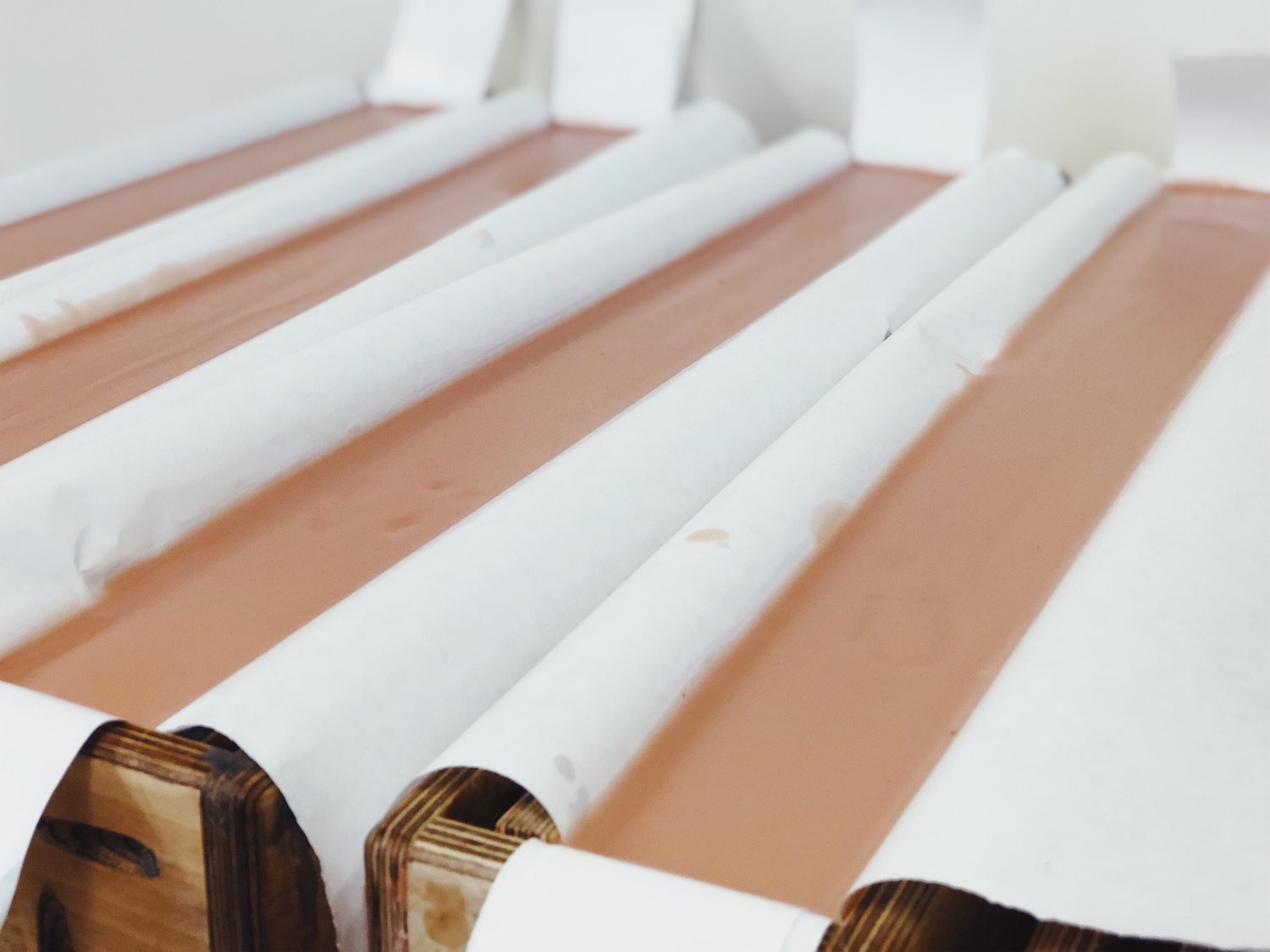
By Sarah York’s account, her family is full of makers and creatives — she just never quite thought of herself as one. In fact, it wasn’t until she learned how to make soap from her aunt in 2012 that the chemist-by-study found a practical use for her inherited creative inclinations. Always in search of products that would work well with her own sensitive skin, Sarah then took what she had learned about fatty acid profiles in college and began making her own line of bar soap, producing so much that she always had gifts ready for family and friends.
Sarah soon began selling her line, Bell Mountain Naturals, on Etsy, applying the skills and experience she had acquired as a real estate agent to her new business endeavor. She set modest goals for herself — cover the costs of production — but mostly just wanted to see where the venture could lead. In 2016, Sarah moved to New Jersey, and the timing seemed right to finally turn Bell Mountain into her full-time job. She launched a new website and began selling at fairs and other public events to see if there was a space within the market that her passion project could fill.
With an emphasis on positively impacting environments from which their ingredients are sourced — and that goes for the biological environment as much as the workers behind the labor — Bell Mountain Naturals continues to manufacture high quality, eco-conscious soaps and skincare products. They are a Leaping Bunny certified company as of 2017, meaning their products and sourced ingredients are animal cruelty-free. All that to say, we’re incredibly proud to stock such a conscientious maker. Thanks, Sarah, for all your impactful work and thoughtful products!
Read our interview with Sarah below.
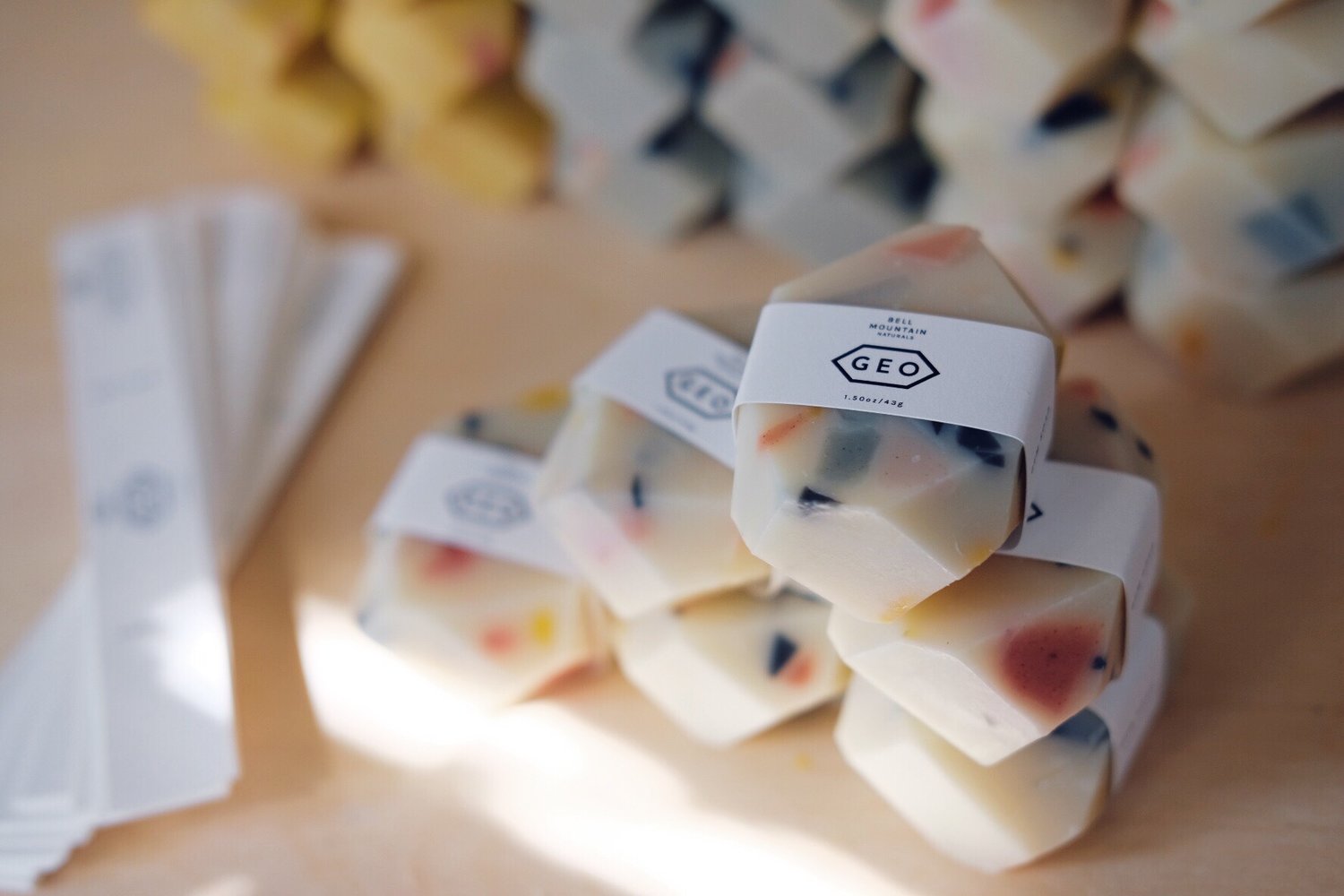
Courtesy of Sarah York
Meet the Maker: Bell Mountain Naturals
S&A: Tell us a little bit about how Bell Mountain Naturals came into existence. What is your background in, and what were your goals when you first launched?
S: I started making soap as a hobby in 2012. I asked my aunt, who is also a soap maker, to teach me, and I was completely hooked. I have sensitive skin and was always on the search for gentle skincare products with simple ingredients that didn’t break the bank. I also studied chemistry in college, which gave me a solid foundation of fatty acid profiles and the benefits they added to bar soap.
Eventually, I started making more than we could use and I would give them away as gifts to family and friends. I knew right away I wanted to make it into a business, but didn't have the slightest clue what that path looked like.
My family is full of makers, artists, and creatives. Our house was always in a state of creating, but I never considered myself to be artistic. Soap making gave me an outlet that satisfied that creative need but had a practical everyday use.
Once I made the decision to sell my soaps, I started an Etsy page. I didn't have a plan — it was like, "Let's see what happens!" My initial goal was to cover the costs of making soap. Luckily, at the time I was a real estate agent and was able to take what I learned about business from that and apply it to my soap business.
When we moved to New Jersey in 2016, I decided that was the perfect time to make the leap and turn Bell Mountain into my full time endeavor. I launched a website and started doing markets to get feedback and to see if there really was a market for what I was making.
Courtesy of Sarah York
S&A: What is your ingredient sourcing process like when you're working on new products? Are there key factors that you all look for in a source when determining if it aligns with BMN core values?
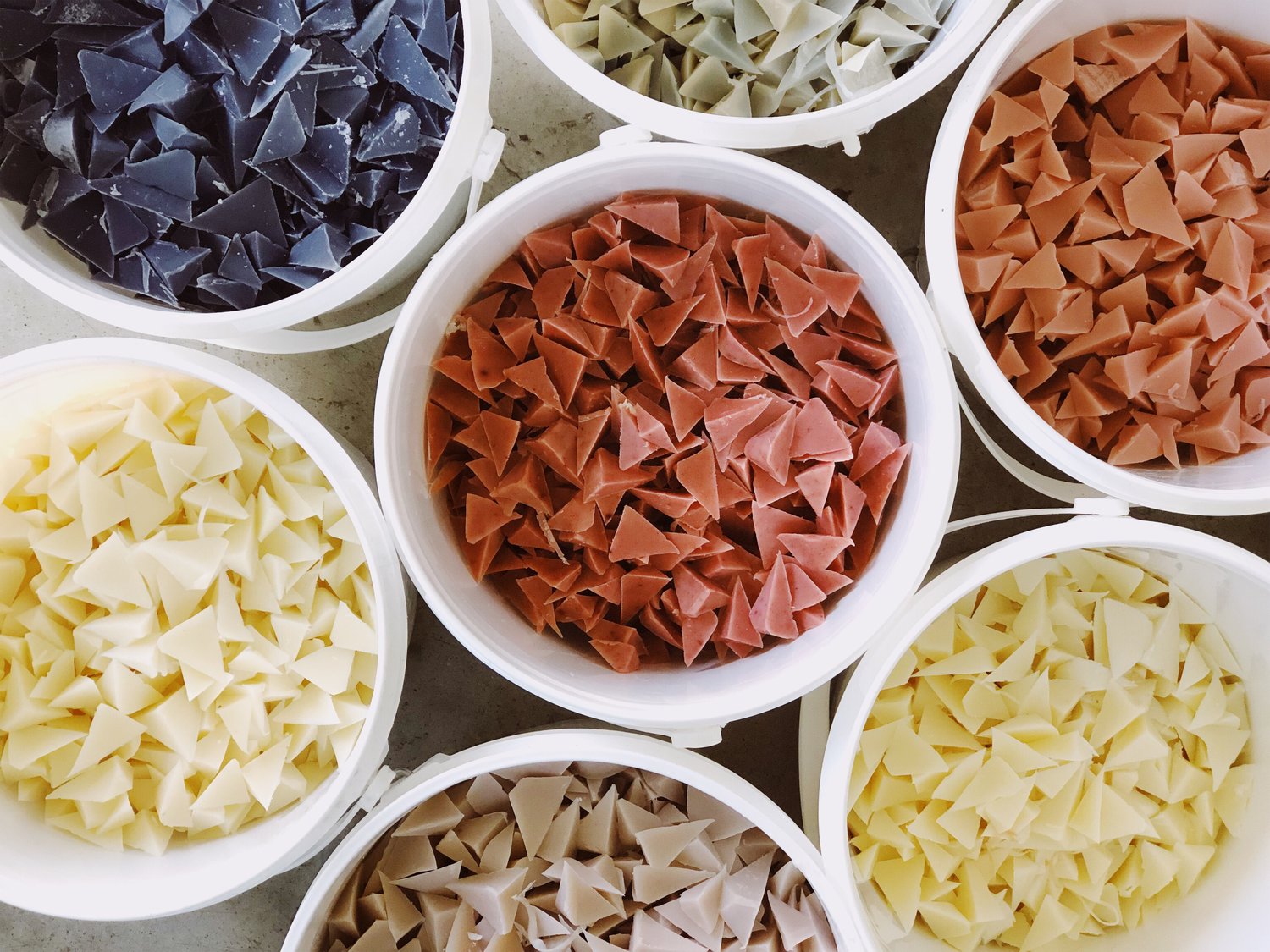
S: It's definitely a constant state of learning, but I knew right away I wanted Bell Mountain to have a positive impact on local ecologies, environments etc., while keeping it at a price point that is attainable. When I started, I read about the effects of the palm industry and knew I couldn't be part of that. (Palm oil is considered "standard" in most soap formulas). I started formulating all our soaps to be palm free, using shea butter as an alternative for all its wonderful skin-loving properties. When I realized shea came with its own set of problems like abuse and unfair practices. I knew we had to find a solution that didn't exploit people or the environment. We started using organic shea sourced from women's cooperatives that ensure safe labor methods.
I was recently working on a formula using palo santo, but ultimately decided against it because it has been overconsumed to the point of being an endangered species.
Each ingredient we use, the companies we source our ingredients from, and the impacts they have are all considered before being added to our line. I went through the process to get Leaping Bunny certified in 2017. It feels good to know we have commitments from our manufacturers that they are cruelty free across the board.
Courtesy of Sarah York
S&A: Why is it important to you that your products contain natural ingredients and are packaged in either recyclable or reusable materials?
S: I think it's super easy to overcomplicate things, and looking at my own life and the products I have used has been eye opening. I was in a cycle of using harsh synthetic ingredients on my skin that in turn made other problems, and before I knew it, the long list of products I was using felt ridiculous. That's not to say there isn't a time and a place. But for me, most of the time, I found keeping it natural and simple was the best practice.
Once I realized that, I wanted it to translate into all our products. I feel like we, as women, are targeted with so many products to make us younger, less wrinkles, skinnier, etc., and I didn't want to be a part of that. I think having healthy, happy skin is enough.
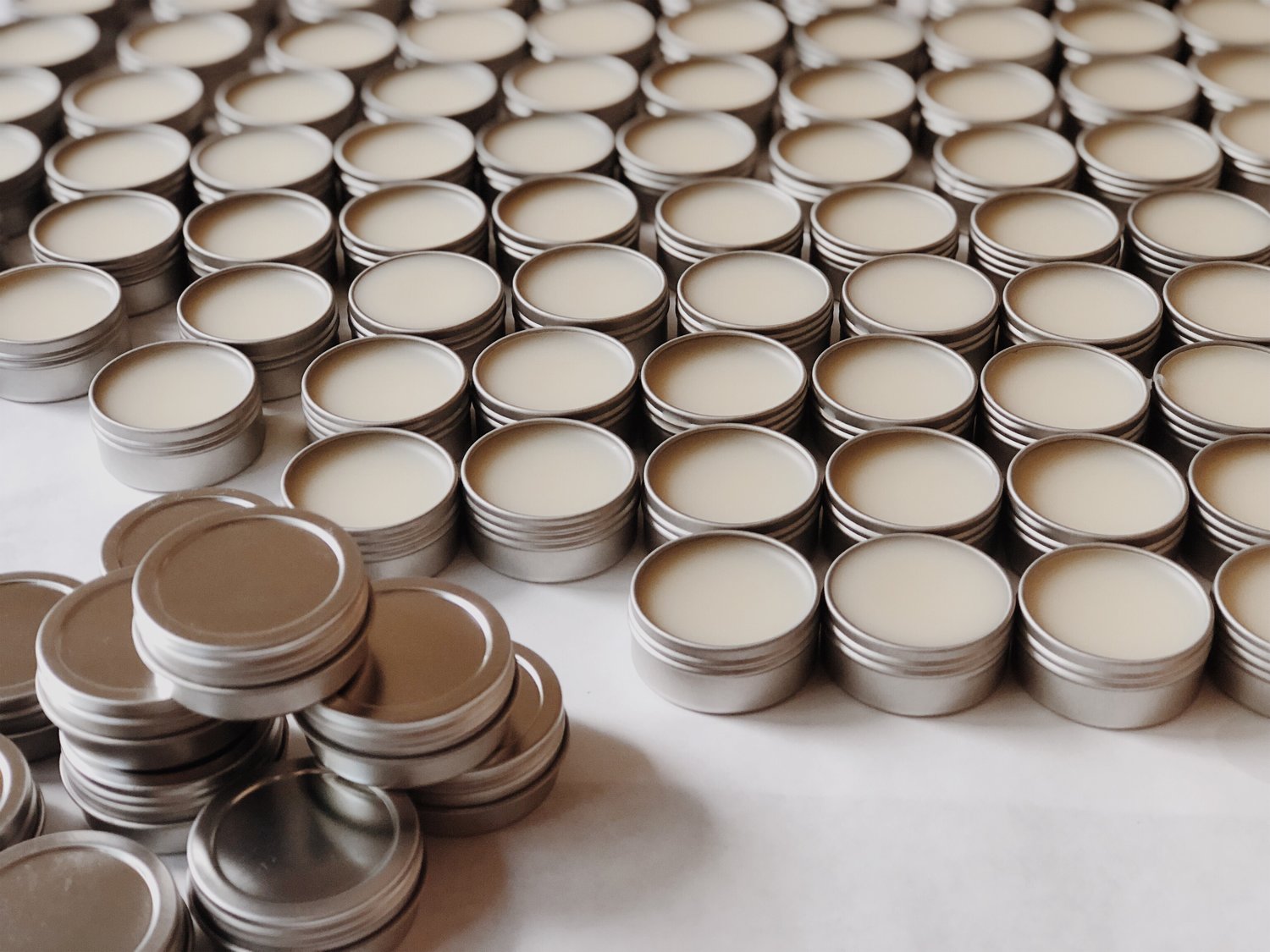
For packaging, I couldn't in good conscience make a brand that ignored important environmental issues we all face. Like this whole process, it's been a learning curve. I use compostable bags and recently found out they can only truly be composted in commercial grade composting sites. That really bummed me out and has sent me back to the drawing board.
It can be hard as a small manufacturer sourcing eco friendly packaging. There aren't a lot of cost effective options available. But I feel it's getting better each year.
Courtesy of Sarah York
S&A: What serves as inspiration when coming up with new products for BMN?
S: Inspiration comes from all over, but the simplicity and beauty of nature will always be my guide. It's also part of the challenge for me — to make something that fills a hole, or at least offers a greener alternative to conventional products.
S&A: Do you have any personal habits or routines that you've found help the creative/making process?
S: I have a tendency to not stop and will be busy for busy's sake. If I don't feel "productive", I can get down on myself. But learning (slowly) to step back and pause is where I find the biggest moments of growth. To be honest, I’m still trying to find my groove through this whole process haha!

TAIT Design Co. Studio
S&A Meet the Maker: Tait Design Co.
Matt Tait has always been a tinkerer. Since childhood, the designer has been fascinated with assembly and could oftentimes be found picking apart appliances and reassembling them, or setting up skate ramps outside his Michigan home. Matt went on to study graphic design and eventually began working in marketing as an Associate Creative Director, but he missed tinkering. He developed an itch to get back that childhood feeling, that desire to create something impactful and lasting — something you could interact with in real life that wouldn’t just live in a computer.
After taking classes at a makershop on everything from welding to woodworking, Matt’s re-ignited passion only grew. The creative spark then took full flame after he paid a visit to his local hardware supply store, where he spotted a model airplane kit hanging by the register at checkout. The classic kids’ toy struck Matt, as it hadn’t gotten much of an update in close to 50 years. He decided to apply the skills he had recently learned through the makershop towards a much-needed redesign, dubbing his makeover The Turbo Flyer. Matt created a website to sell his new creations, garnering so much traffic the first week he took the site live (over 30,000 curious visitors!) that it crashed shortly after launch.
Matt went on to operate TAIT Design Co. mostly on nights and weekends, balancing it with his full-time job. He was then approached in the summer of 2017 by Audrey Elkus, another designer still in school at the time, about working together. After Audrey came on board, the two developed an undeniable chemistry, and decided to focus all their efforts — not just those hard to come by nights and weekends — on TAIT later that fall, taking it from side hustle to legitimate business venture.
Fast forward a few years and they’re still going strong, with an expanded offering of toys and home goods ranging from yoyo’s to wall clocks, all designed in-house and handcrafted from materials sourced throughout the U.S. While unique, eye-catching design obviously takes precedence for the company, TAIT’s core values also revolve around keeping as much of their product manufacturing as close to their native Detroit as possible. They estimate an over $250,000 impact to the city’s economy already.
Read my interview with Matt and Audrey below.

Matt Tait and Audrey Elkus
Meet the Maker: TAIT Design Co.
S&A: Matt, we know you went to school for graphic design and worked in advertising before making TAIT Design Co. a full-time venture. Where did your interest in industrial design stem from, and what made you decide it was time to turn the side hustle into your main focus?
M: I’ve been building things my whole life – I was the type of kid who would take apart appliances and put them back together, and build skate ramps in my driveway. But after going to school for graphic design and working in advertising, I ended up spending the majority of my time working on digital design rather than physical.
When I was working as an Associate Creative Director, I began to get tired of making things in the computer. No matter how much work we put into a project, in a year or two it would be outdated and we’d have to start from scratch. To experiment outside of work, I started taking classes at a local makershop that unfortunately no longer exists called TechShop. I took every single class there, from welding to woodworking, and became really obsessed with industrial design and 3D work.
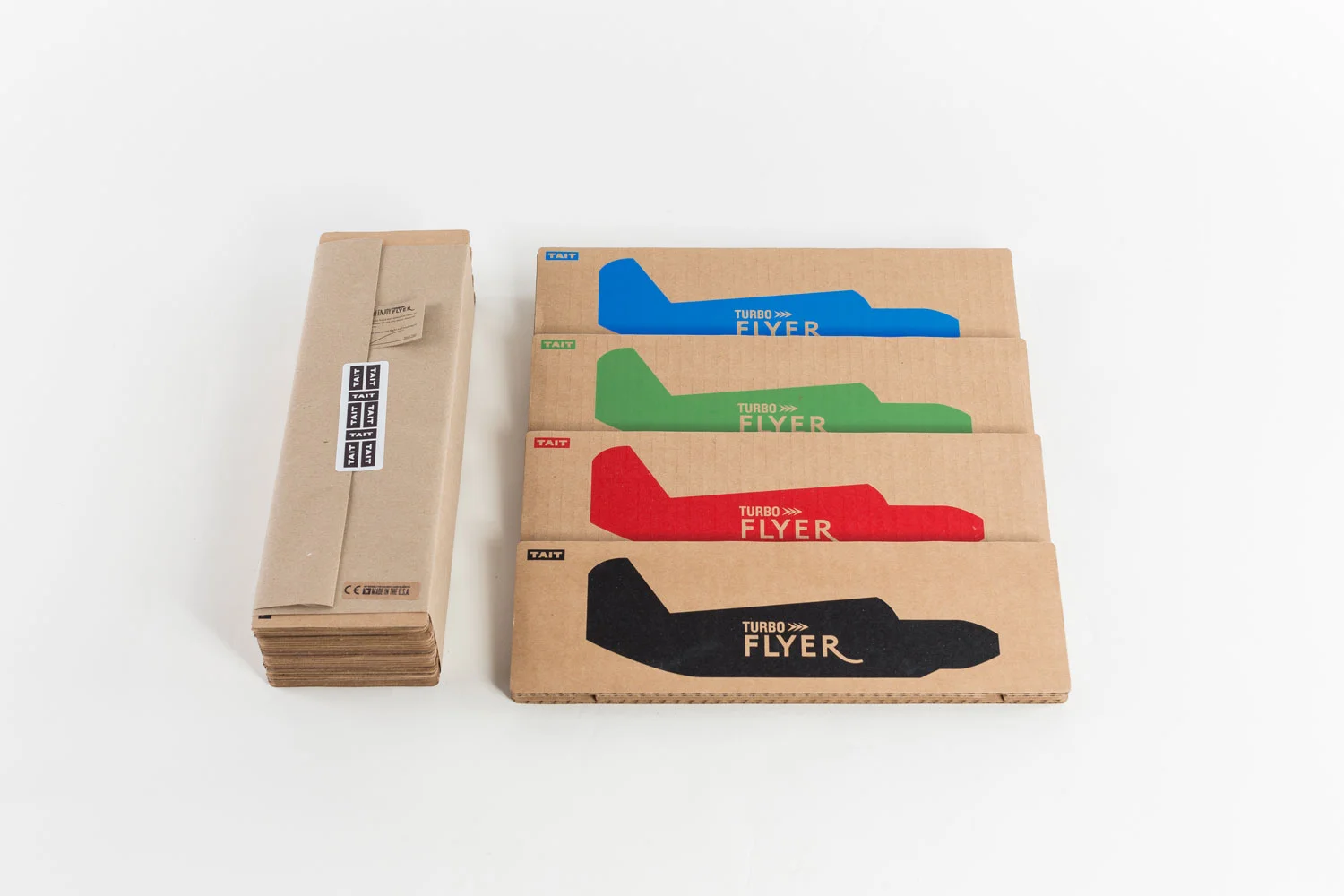
Around the time I finished up the last class there, I was in a hardware store buying supplies and noticed a balsa model airplane kit in a plastic bag behind the register. I realized that no one had re-designed that classic toy in about 50 years, and saw an opportunity to apply all the skills I had learned at TechShop to make it better.
I immediately honed in on this project, completely re-designing the plane, its graphics, and the packaging it came in. I ended up calling it The Turbo Flyer, and showed it around to my friends at work. Everyone wanted one, so I thought it would be fun to set up a website for just this one product and see what happened next.
I launched it online, not sure what to expect. But the very first weekend over 30,000 people came to the website! It crashed, and I had orders rolling in nonstop for weeks. All of a sudden, I had a business. And eventually, it got to the point where it just became too hard to balance my full-time job and this side hustle. I had to choose – and I chose to focus on TAIT Design Co. exclusively back in September of 2017.
TAIT Design Co.’s Turbo Flyer
S&A: How did you and Audrey meet, and how have you two worked together over the years to shape the company's creative vision?
A: It’s a pretty funny story. At the time, I was still in school and searching for summer opportunities close to home. I found the TAIT Design Co. website and thought there was a big team behind it. I wrote in to the general contact form asking if there was room on the creative team, and when Matt wrote me back, I found out it was actually a one man show! Matt still had his full-time job and was working on the business at night and on the weekends.
That first summer we worked on a packaging project together and realized we made a great team. Within a few months of working on the weekends, we started talking about doing this together in a more serious way, and making it into a real business rather than a side hustle.
We’ve worked really hard to maintain the same values we’ve had since the beginning: to make great products, manufacture our line as close to home as we possibly can, and to support our community through local hiring and partnerships as we grow and scale. Now, four years after meeting, we own the business together, have our own studio space, a team of 5 employees, and a full product line that’s in 250+ stores all around the world. It’s pretty crazy to look back on all of our growth! It’s really been a wild ride.
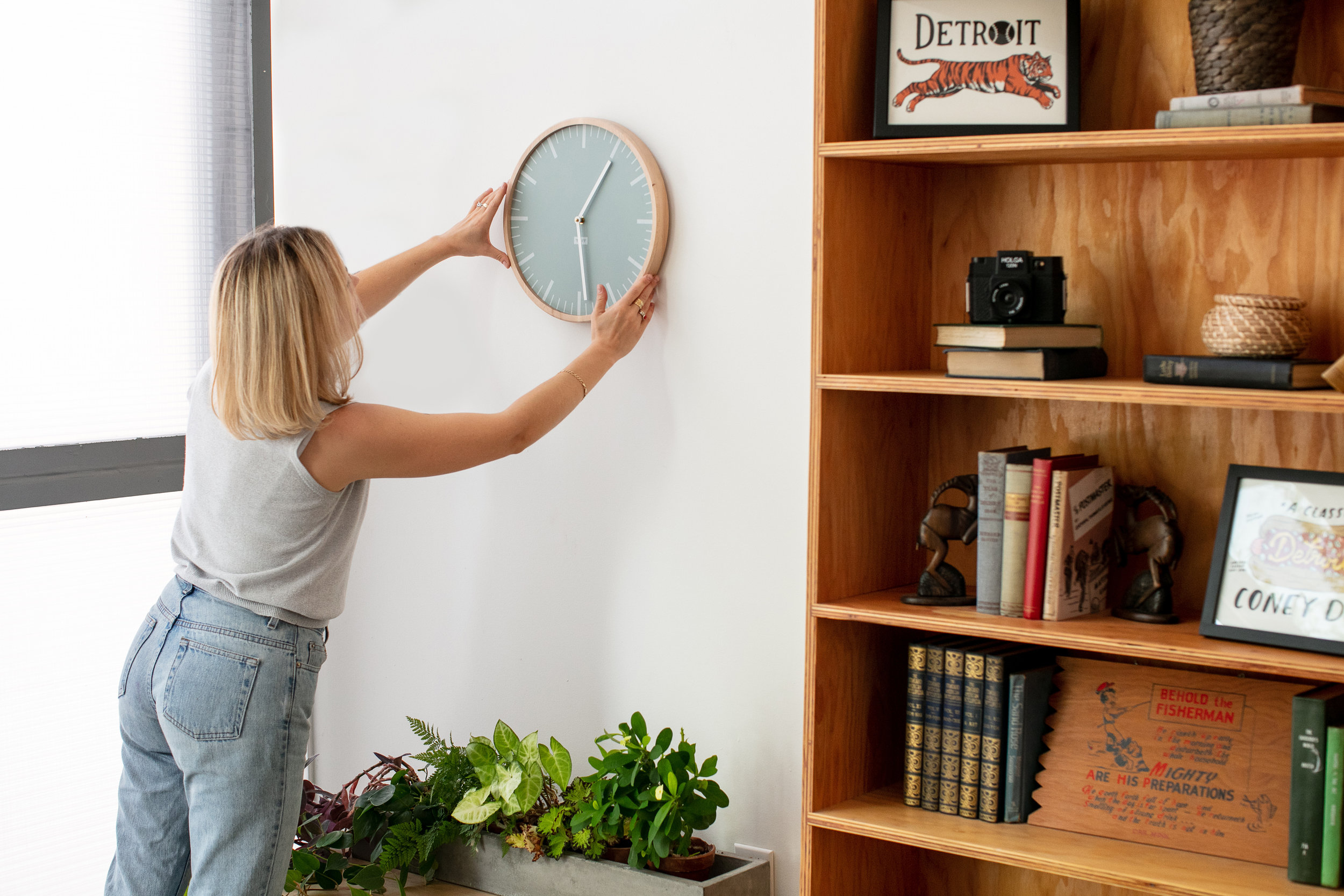
TAIT Design Co.’s Wall Clock
S&A: Why is it important to you both to use U.S.-sourced materials and keep the manufacturing process as regional as possible?
M: In the beginning, I was making every Turbo Flyer by hand in my basement. As I started to realize that I needed help, it only made sense to find someone nearby to talk to. Michigan has such a rich manufacturing history, and the ability to work with true experts in their field that just happen to be a short drive away has been incredible.
As we’ve grown, being able to go back to those vendors and give them larger and larger orders is one of the best parts of my job. Watching them hire up from the community or buy a machine just to handle our orders really shows the ripple effect of working with local partners.
At this point, those relationships have grown so strong that we wouldn’t think of moving our production overseas. We’re creating and sustaining jobs here, and get to have a very high level of oversight as well. It has worked out great for us, and we highly recommend working in this way, if possible, to anyone who is manufacturing a physical product.
S&A: Is there anything in particular that serves as creative inspiration when you're getting to work on a new design?
A: Traveling somewhere new is always a great way to spark new ideas and inspiration. It doesn’t need to be somewhere far away – even going up north in Michigan and spending time outside in nature is a great way to refresh and think about something new.
M: Besides getting outside, going to museums and art festivals is another great way to think differently about a new idea. I was able to go to Salone Del Mobile in Milan a few years back, and that was one of the most inspired events I’ve been to.
S&A: How would you characterize your business's relationship with Detroit? What benefits does the city present to a creative business such as TAIT?
A: Detroit is a really special place to be an entrepreneur or small business owner. The community here is incredibly supportive and more than willing to share ideas, contacts, or best methods on how to accomplish something. It’s really not a competitive space – everyone wants each other to succeed. We feel lucky to be a part of it!
M: And of course, so many of our great manufacturing partners are in or around the city. Getting to work with such talented, creative people is a huge benefit of our work.
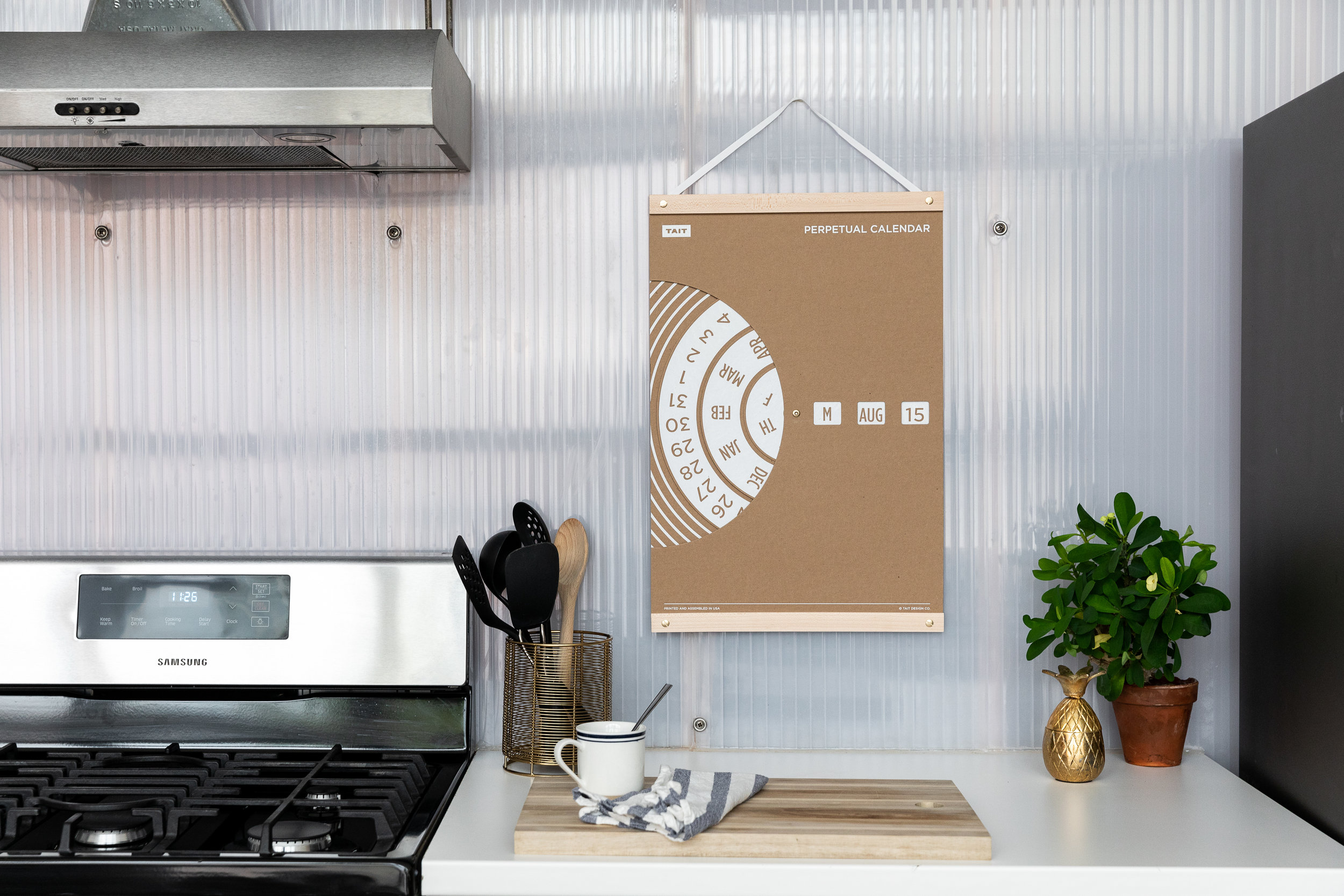
TAIT Design Co.’s Perpetual Calendar
S&A: Any other makers or small businesses in Michigan you're particularly fond of?
A: So many! POST is a creative co-working space we work out of, and there is a storefront that carries over 100 different Michigan artists’ work. It’s a special spot, and our friends from Mutual Adoration woodworking, Hooray Forever graphic design, and Scarlet Crane Creations screen printing work out of there too. Outside of our studio, the team over at Bon Bon Bon makes great chocolate bon bons. And some of our favorite shops in the city are Nora and City Bird.
M: Yes! We’re also fans of Detroit Abloom flower farm right near our studio, and the team over at Corbe makes beautiful ceramics as well. And you can’t talk about Michigan businesses without mentioning Zingerman’s – the delicious food empire in Ann Arbor.
Scout & Arrow In-store Bios
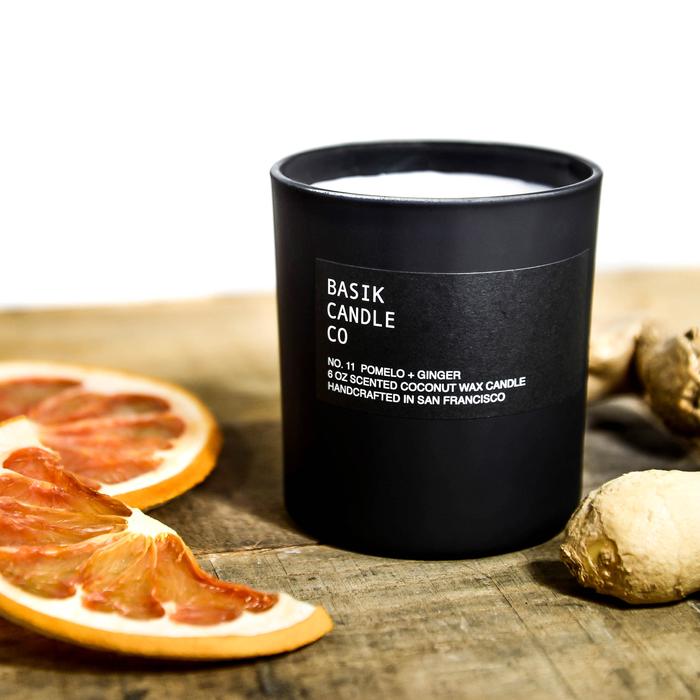
San Francisco-based couple Travis Troyer and Allen Chen tested many different types of wax for their Basik candle line before deciding on a coconut wax blend, which is both clean burning and has an amazing scent throw. From their teakwood and leather combo to their Mediterranean fig tree scent, each candle uses skin-safe fragrance oils infused with essential oils that are sure to spice up any room.
Pigeon Toe Ceramics is a lovely sister-powered small business located in Portland, Oregon. Ceramicist Lisa Jones has crafted unique pieces from high-quality porcelain for a little over a decade now, imbuing her mugs, vases, and more with a spirit you won’t find in a mass-produced good. Their wares are handcrafted and made with certified food safe, lead-free glazes.
Artist Brit Roennigke crafts her candles with care in small batches out of her Los Angeles bungalow, placing precise focus on each individual candle so that all her creations are top notch. Following a career in fashion merchandising, Roennigke has developed a thoughtfully designed and irresistibly scented collection in R O E N. We think her quest to capture the spring scent of citrus blossom and jasmine was successful.
Anne McClain launched MCMC Fragrances after gaining an extensive background in natural perfumery and aromatherapy, bolstered by an immersive learning experience in Grasse, the perfume capital of France. Owned and operated alongside her sister in Brooklyn, MCMC’s fragrances are crafted in small batches and bottled by hand in-house. Testing is highly encouraged!
Have you noticed that Scout & Arrow has a soft spot for minimalist design? We’ve been lucky to find a kindred spirit in ceramicist Nicole Novena and her modern handmade pottery. Her line of goods, Clay + Craft, launched in 2016 in San Diego, and we have been in love with Novena’s simple and functional style ever since.

INNAjam —
In need of something to spice up that bland assortment of finger foods you’ve been tasked to prep for this weekend’s main event? Look no further than an INNAjam spread. Founded by Dafna Kory after tasting and then recreating the best jalapeño jam she’d ever had, INNA makes jellies that are delectable and made from organic fruit sourced within 150 miles of their Emeryville, CA home base. Add any INNAshrub to the soda water of your choosing for an out of the box sip, too. Perhaps then add that to the clear liquor of your choosing for a responsible and flavorful punch.
We carry a fairly wide assortment of Bell Mountain Naturals’ products — and for good reason. They use ethically and sustainably harvested raw ingredients, including plant based oils and butters, mineral rich clays, and therapeutic grade essential oils. They also smell great, are packaged beautifully, and do the dang trick. Seriously, whether you’re looking for a nice clay face mask or a hydrating face serum, Bell Mountain has your needs covered.
The San Francisco Bay Area-based Yuzu Soap takes its name from one of its key ingredients. In addition to pure yuzu juice, these premium soaps are made using plant based oils and rich butters, which create a gentle, moisturizing product free of chemicals and synthetic detergents. Their comfort-inducing bars and bath bombs make for great gifting — or personal presents.
Daughter of the Land founder Ashley Spierer found the spark for her business while working for a maternal health startup in India. She had packed an ample supply of familiar face and body products comprised of a laundry list of ingredients, but was instead turned onto the magical simplicity of coconut oil by a friend. Realizing that skincare can be boiled down to a much easier routine using natural products, Spierer launched Daughter of the Land, which operates out of Seattle. Every formula is made with fair trade and organic ingredients, and every package is made with sustainability in mind, utilizing recycled paper, glass, and metal.
Sisters Body was formed by three New York-raised sisters — one a musician, one a family doctor, and one a mid-wife — in hopes of creating a non-toxic and nourishing line of hair and body products for themselves, their friends, and their families. The changing political climate of 2017 shed new light on Sisters’ mission, though, as the threat to defund Planned Parenthood and other similarly minded women’s health organizations became more of a reality. The gals now donate 40% of all profits to organizations that support women’s health.

Nathan and Stephen Tucker operate Powder Studio in Monroe, NC, just outside of Charlotte, but their functional porcelain jewelry and homewares look out of this world. With a cosmic bent, the couple prides themselves on operating with a commitment to sustainability, crafting pieces in small batches to capture their rich personalities and “flavors". After all, even though they might like to be living on another planet, they know that life on ours is precious.
Norden —
Norden’s Southern California headquarters provides the perfect inspiration for these carefully considered and functional home goods. Founded by wife and husband team Erika and Pete Panciera, Norden’s wares run the gamut from planters to room sprays, tea towels to candles — all made with a warmth and attention to detail.
TAIT Design Co. is a Detroit-based independent product design studio owned and operated by Matthew Tait and Audrey Elkus. Their timeless homewares and toys intended to help mental and social development are crafted from 100% US-sourced materials. A large part of their mission is impacting the local economy, so expect their clocks to be manufactured within the Great Lakes region.
San Franciscan artist Jen Garrido started using the name Jenny Pennywood around 2008 to distinguish her painting from her broader design work. Since then, the name has come to encompass a textile line of locally sewn everyday goods. All fabrics are designed in-studio and screen printed in water-base inks.
Grocery store greeting cards just not doing it for you anymore? New York paper goods producer Hartland Brooklyn has heard your call and crafted a unique line of cards to cover all your well wishing needs in response. Grads, dads, and every occasion in between is accounted for here. Hartland’s hand illustrated cards are printed with vegetable-based inks on high quality felted paper — a sure shot your loved one will remember the sentiment for years to come. Oh, did we mention Hartland also offers an assortment of the cutest gift wrap and temporary tattoos you’ve ever seen?
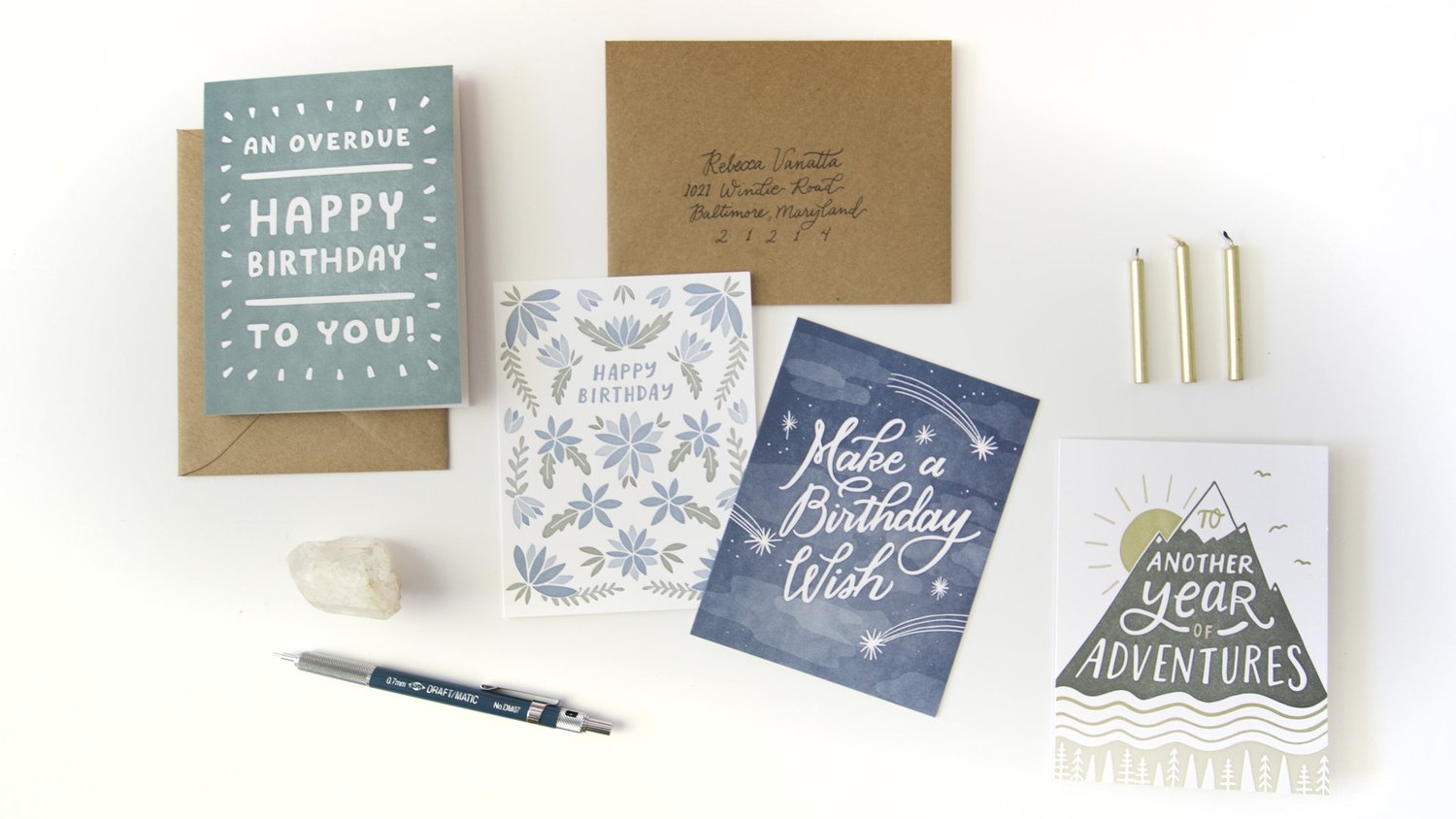
HeartSwell makes our heart…well, swell. As cheesy as it sounds, this letterpress greeting card company founded by South Florida native Renee Griffith prints the cutest, most memorable cards on 100% recycled materials. They’re thoughtful and sweet and all the things you want in a greeting card company when you don’t quite know how to express everything you’re feeling yourself.
EggPress —
EggPress has been in the letterpress greeting card biz for roughly 20 years now and in that time, they’ve fostered human connection with each and every card printed. Their funny and memorable cards are designed and printed in Portland, but they also manufacture for three other stellar brands: HelloLucky, ASHKAHN, and 1973 Ltd. You’ll recognize an EggPress card by the pink egg at the top of their card’s corner, but you’ll remember it for all the thanks you’ll get in return.
Shorthand (Iron Curtain Press) —
Rosanna and Joel Kyernmo founded Shorthand in 2008 in a backyard shed in Seattle, but their much-loved letterpress company has grown into a full fledged print house and storefront in the 10 years since. Now based in LA, the couple wholesale roughly 120 cards across the country, in addition to custom printing countless other creations in the City of Angels. Be sure to take a look at their notebooks and organizers, too!
L.A. based artist Debbie Bean has worn many artistic hats over the course of her life, including Tibetan Painter, rock photographer and, currently, stained glass maker. Geometric architectural elements are a big influence on Debbie’s designs, and each piece is unique yet functional, thus ensuring differentiation from your run of the mill factory reproduction. Take a look at how the sun shines through her triangles and parallelograms hanging from our window and tell us that isn’t something.
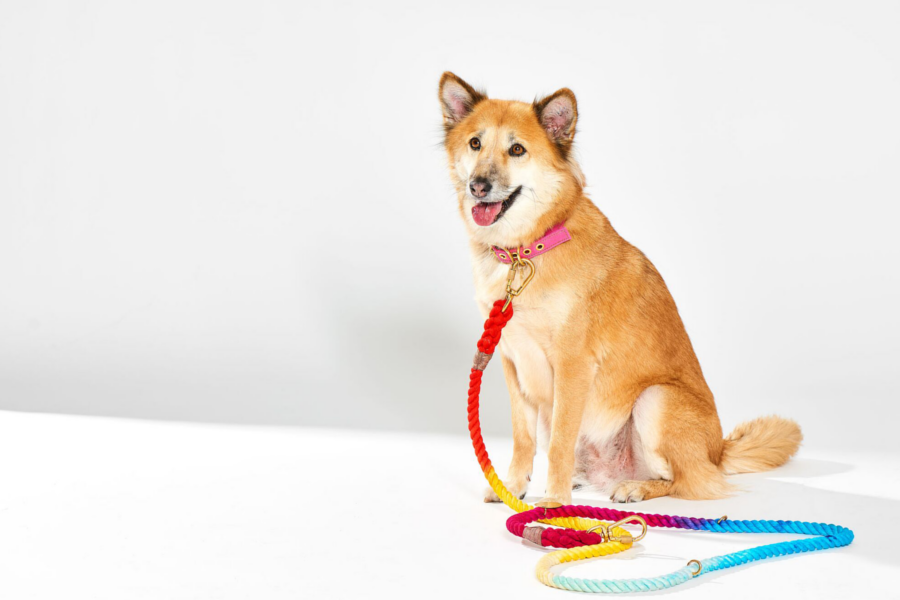
We’re incredibly excited about all our makers, but Found My Animal provided us with an opportunity to stock something we otherwise hadn’t yet — and proceeds from their sales go to a great cause to boot. FMA was founded in 2006 to promote animal adoption, and sales of their marine-grade rope leashes, collars, and other accessories contribute to their mission of providing a home to all those furry friends out there.
Non-Perishable Goods, or NPG as we like to call them, was founded by designer Shay Carillo. Their products are hand-crafted using natural fiber materials, including linen, wool felt, vintage wool, recycled cotton, and repurposed denim, among others. Shay was inspired to create her line of homewares by the long summer dinners she spent with good friends, and the idea of creating a warm and inviting home that expresses and creates ritual. We hope you find them as comfy and inviting as we do.
Our dear friend Olivia Terrell was born and raised in Nashville, but has called Athens — where she pursued a Bachelors of Fine Arts from UGA — Madrid, and now New York City home over the years. Her jewelry took a noticeable stylistic turn specifically after living in Madrid and New York, influenced heavily by each city’s beautiful architecture.
You might think we’d be a little biased in telling you Atlanta-based designers and printers Paper Ghost Press are some of our favorites, if they didn’t have the chops to back it up — but they do. Seriously, take a look at that mural outside if you don’t believe us. Sarah Neuburger, Katrin Wiehle, and Mike Lowery are the brains behind this creative operation, and their illustrations range from depictions of famous Atlanta landmarks to kid-friendly renditions of your favorite animals. Don’t you love them as much as we do now?
For those of you who create, doesn’t it feel like making something for someone else to admire from afar only fulfills you so much? After years of gallery showings, Virginia based sculptor Park Swan wanted to make something with an everyday use, something that folks could appreciate up close on a daily basis. He and his wife Leslie started Park Woodshop, which would in time develop into Black Swan Handmade, a full fledged home goods manufacturer. Everything is designed, tested, and made by Park, and materials are sourced ethically from American producers.